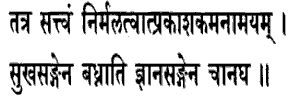
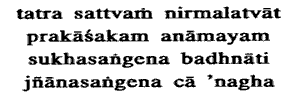
| 6. Of these,
Sattva, which, from its stainlessness, is lucid and healthy binds by attachment
to happiness and by attachment to knowledge, O sinless one. It is stainless
like a pebblestone, and therefore lucid and healthy. Sattva binds the Self
by making Him think I am happy ;it binds Him by causing in Him attachment
to happiness , by bringing about a union of the subject (the Self) with
the object (happiness). It makes Him think Happiness has accrued to me:
This attachment to happiness is an illusion; it is avidya. An attribute
of the object cannot indeed belong to the subject ; and it has been said
by the Lord that all the qualities from desire to courage,, (xiii. 6) are
all attributes of Kshetra (matter), the object. Thus it is through avidya
alonewhich forms an attribute (dharma) of the Self as the nondiscrimination
between the object and the subject,that Sattva causes the Self to be attached
as it were to happiness which is not His own, causes Him, who is free from
all attachment, to be engrossed as it were in happiness ; causes to feel
happy as it were Him who does not possess the happiness. Similarly, Sattva
binds the Self by attachment to knowledge. From its mention here along with
happiness: knowledge meant here must be an attribute of the antahkaranaof
the Kshetra (matter), of the Objectnot of the Self ; for if it were an attribute
of the Self, it cannot be an attachment and cannot be a bondage. Attachment
to knowledge arises in the same way that attachment to happiness arises.
|