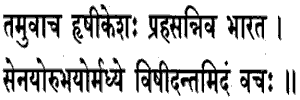
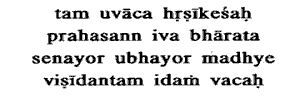
| 10. To him who
was grieving in the midst of the two armies, O descendant of Bharata, Hrishikesa
as if smiling, spoke these words:Selfknowledge alone eradicate misery Now
the portion from 2 to 9 should be interpreted as showing whence arise those
evils of grief, delusion, etc which in sentient creatures cause the misery
of samsara.To explain: In ii. 4 et seq, Arjuna displayed grief and delusion
caused by his attachment for, and the sense of separation from, dominion,
the elders, sons, friends, wellwishers, kinsmen, near and remote relations,all
this arising from his notion that I am theirs and they are mine. It was
when discrimination was overpowered by grief: and delusion that Arjuna,
who had of himself been engaged in battle as the duty of the warrior caste,
abstained from fighting and proposed to lead a mendicants life, which was
the duty of a different caste. Accordingly, all creatures whose intelligence
is swayed by grief and delusion and other evil influences naturally abandon
their proper duties and resort to those which are prohibited. Even if they
are engaged in their duties, their conduct in speech, thought and deed is
egoistic and is prompted by a longing for reward. In their case, then owing
to an accumulation of merit and demerit, of dharma and adharma, the samsara,
which consists in passing through good and bad births, happiness and misery,
becomes incessant. Grief and delusion are thus the cause of samsara. And
seeing that their cessation could not be brought about except by Selfknowledge
added to renunciation of all works, Lord Vasudeva wished to teach that knowledge
for the benefit of the whole world through Arjuna and began His teaching
· The doctrine that knowledge should be conjoined with works |