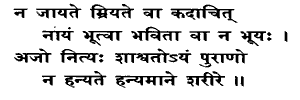
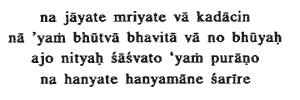
| 20. He is not
born, nor does He ever die ; after having been, He again ceases not to be
; nor the reverse. Unborn, eternal, unchangeable and primeval He is not
slain when the body is slain.He is not born ; no such change of condition
as birth takes place in the Self. Nor does He die ; this. denies the last
change of condition called death. Ever should be construed with the denial
of every change, thus: He is never born, never dies, and so on.For, the
Self, having once existed does not afterwards cease to be any more. In ordinary
parlance he is said to die who, having once existed, afterwards ceases to
be. Neither does the Self come into existence, like the body, having not
existed before Wherefore He is unborn. For, he is said to be born who, having
not existed, comes into existence. Not so is the Self. Wherefore He is unborn.
And because He .does not die, He is eternal. Though, by the denial of the
first and the last changes, all changes have been denied, yet it is thought
necessary to directly deny the intermediate changes, in the words unchangeable,
etc so as to imply the absence of all such changes of condition as motion,
though not specified here. He is unchangeable: He is constant, not subject
to the changes of condition known as decline (apakshaya) Having no parts,
He does not diminish in His own substance. As devoid of qualities, He does
not diminish by loss of a quality. He is primeval. not subject to the change
known as growth (vriddhi) as opposed to decline. For, that which increases
in size by the accretion of parts is said to grow and to be renewed. As
devoid of parts, the Self was as fresh in the past (as He is now or will
be in future ; i·e He is ever the same); he never grows. And He is not slain
when the body is slain: He is not transformed when the body is transformed.
|